Wireless should be easy money for MSPs.
Your clients already need it. Outages make it urgent. And with 5G, wireless now works as both backup and primary connectivity. Yet I still see a lot of MSPs barely breaking even on wireless, or avoiding it altogether.
The issue isn’t demand. It’s control.
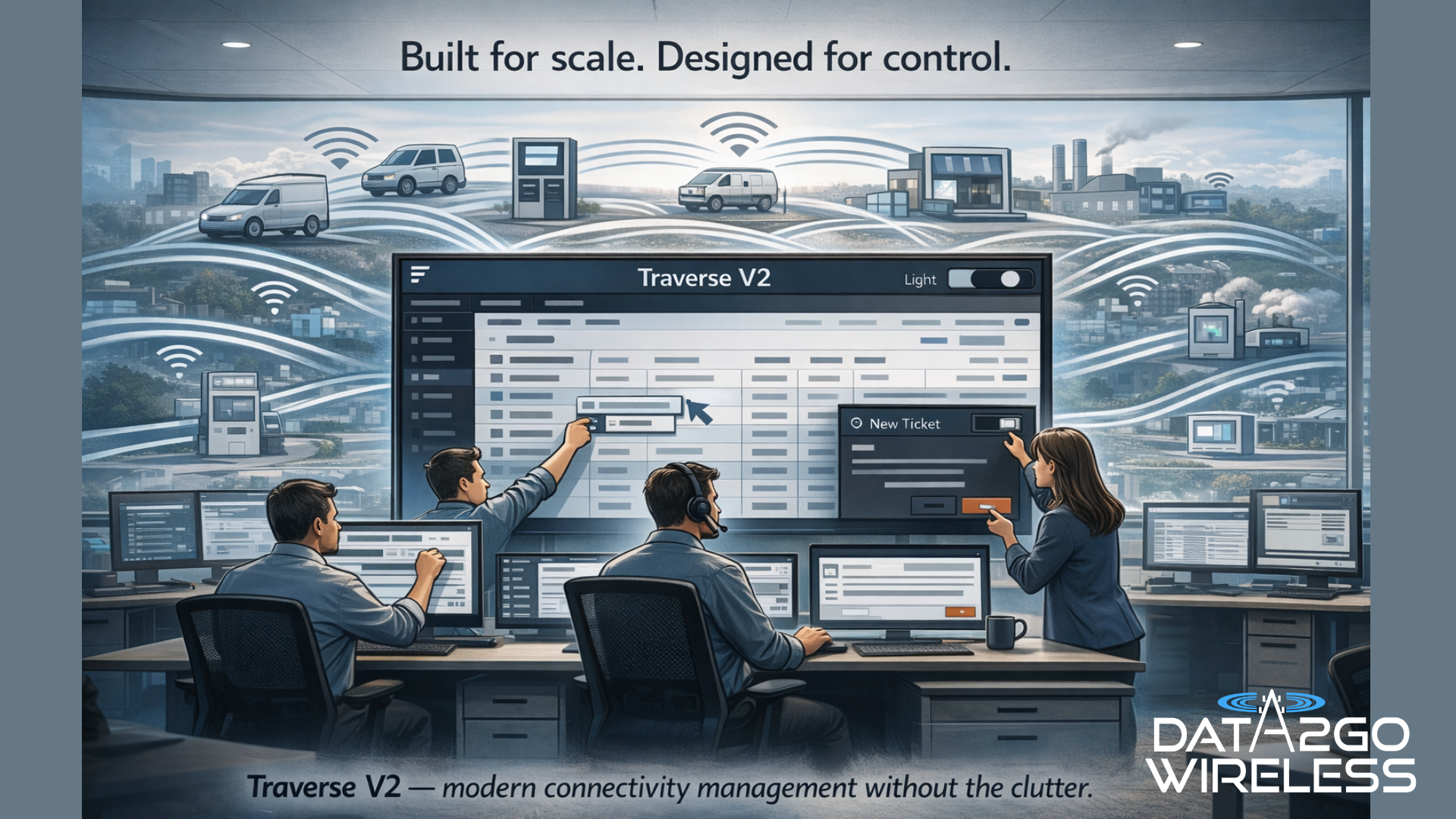
Most MSPs don’t lose money on wireless because of pricing. They lose money because they’re managing it manually, across too many systems, with no real visibility. And once wireless becomes high-touch, margins disappear fast. That’s exactly why we built the Traverse Platform.
Wireless Falls Apart When It Lives in Too Many Places
In many MSP environments, wireless operations are scattered across the network. Activations happen in one portal. Usage is checked somewhere else. Billing lives in spreadsheets. Alerts show up late or not at all.
When wireless lives in five different places, it never scales. Every new client adds friction. Every deployment adds risk. That’s not a revenue problem: it’s an operational one. Without a centralized way to manage lines, plans, usage, and lifecycle events, MSPs are forced to babysit wireless instead of monetizing it.
And the moment something becomes high touch, your margins vanish.
Traverse Was Built for Service Providers, Not Carriers
One thing I’ve learned over the years is that most carrier tools were never designed for MSPs in the first place. Carrier portals are built for carrier workflows. They’re not built for service providers managing dozens, hundreds, or thousands of lines as part of a broader client relationship.
Traverse flips that model.
Instead of being carrier-centric, it’s MSP-centric. It gives service providers direct control over activations, suspensions, rate plans, usage visibility, and reporting, across all major U.S. carriers, in one place. The goal was simple: stop making MSPs feel like middlemen and put them back in the driver’s seat.
Visibility Is What Turns Wireless into Real MRR
The biggest shift happens when MSPs can see what’s happening before the client calls.
When you have real-time visibility into usage and line status, wireless stops being reactive. You’re no longer chasing overages or explaining surprise bills. You’re managing proactively. That visibility changes how MSPs package and price wireless. Instead of treating connectivity as a pass-through cost, it becomes part of a managed offering you can stand behind with confidence.
You can’t build recurring revenue on guesswork. Traverse gives MSPs the data they need to price services properly and protect their margins.
Automation Is the Difference Between Growth and Burnout
Wireless looks profitable at five clients. At fifty, it becomes painful. At five hundred, it’s chaos—unless you automate. Traverse was built with automation in mind, including API access that lets MSPs integrate wireless management directly into the tools and workflows they already use.
Every manual step is a tax on growth. If you want wireless to scale with your business, it has to fit into how you operate: not sit outside of it. When you reduce manual provisioning, reporting, and line management, wireless revenue can grow without growing headcount. That’s where real profitability lives.
Owning the Platform Changes the Client Relationship
When MSPs control the platform their clients depend on, the relationship changes.
You’re no longer saying, “We’ll check with the carrier.” You’re saying, “We’ve got it.” Clients don’t want to understand cellular plans or carrier nuances. They want confidence that their connectivity is handled.
The MSP who owns the platform owns the experience, and the experience is what clients remember.
The Revenue Opportunity Too Many MSPs Miss
Here’s the hard truth: when MSPs don’t operationalize wireless, they end up doing the hardest part of the work for the least amount of reward.
They support it. They troubleshoot it. They take the calls. But they don’t build real revenue around it. Traverse exists to change that equation.
When MSPs have a single pane of glass for wireless, they stop treating it like a risk and start treating it like a product. That’s when revenue shows up.
The Bottom Line
Wireless isn’t going away. If anything, it’s becoming more central to how businesses operate. The real question isn’t whether MSPs should offer it. It’s whether they want to control it or chase it.
The MSPs who win are the ones who operationalize wireless. Platforms like Traverse make that possible.